
Rachel Howard introduces the practice of “sharenting” and considers the ethical considerations of this practice within the pediatric oncology context, and the potential role of pediatric oncologists.
__________________________________________
In pediatrics, the term “sharenting” has been coined to describe the increasingly common practice by which parents share information regarding their children online. Parents of children with cancer often share details of their child’s cancer diagnosis and treatment over social media, citing mobilization of online support, spreading awareness, and documenting the cancer journey as primary motivators. Sharing information regarding a child’s cancer journey online raises several ethical concerns relating to a child’s right to autonomy, health information privacy, and data sovereignty. Although sharenting is prevalent, there are currently no clinical practice guidelines for pediatric oncologists regarding discussing this subject with patients or parents.
Despite parents’ best intentions, there are ethical concerns with sharenting. The first of these relates to the child’s autonomy, and whether they have consented (or would) to their cancer journey being shared online. Through sharenting, personal details about a child’s diagnosis may become publicly available, potentially contradicting the child’s wishes, who may have shared this information differently (or not at all) if capable and making their own healthcare decisions. In cases where children lack capacity to make their own medical decisions, we should consider the obligations parents hold as substitute decision makers. As the philosopher Joel Feinberg outlined in a child’s right to an open future, children hold autonomy “rights-in-trust”, which are anticipatory rights that will be realized once they develop capacity to exercise them. Ideally, anticipatory rights are protected, but importantly, can be violated when adults make decisions on a child’s behalf. Sharenting a child’s medical information on social media prior to that child voicing an opinion may violate their autonomy rights-in-trust. Pediatric oncology survivors have reported experiencing identity struggles following their diagnosis and treatment, as well as a desire to return to normalcy and to avoid drawing attention to their previous diagnosis. This suggests that controlling their own disease narrative is important to these patients, which could be jeopardized if their journey was extensively shared online.
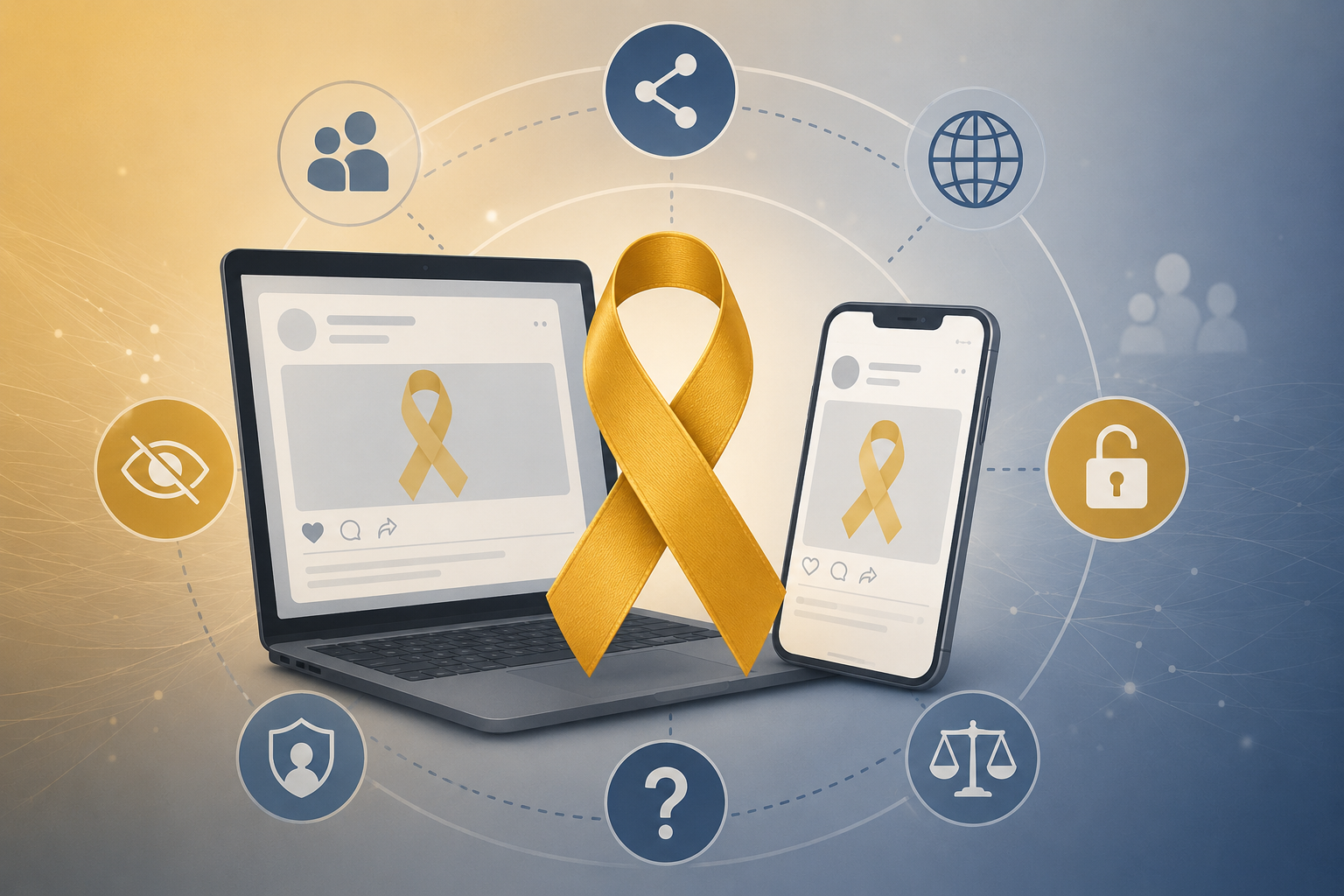
Image Description: An AI generated image of a golden ribbon (symbolizes childhood cancer) surrounded by digital devices and symbols of sharing, privacy, and ethical decision-making.
Sharenting also raises concerns around privacy and data sovereignty, with adolescents having cited this as a top concern with the practice. Indeed, the prevalence of this practice is at odds with the societal value placed on personal health information privacy, as demonstrated through the existence of privacy legislation (e.g., PHIPA in Ontario). This clear value of health privacy should raise questions regarding the extent to which it is reasonable to share another person’s health information online, including parents sharing their child’s information. Similarly, personal data sovereignty, or one’s ability to control how their personal data is collected, accessed, shared, and/or used may be threatened in the current digital landscape where personal data is becoming highly commodified. The salience of these concerns will only grow with the widespread implementation of artificial intelligence (AI) technologies which can access, use, and manipulate online content, potentially surrendering the sovereignty of a child’s medical information to individuals or private corporations with increasingly sophisticated means of data analysis and manipulation.
It is not difficult to imagine that for parents of children with cancer, sharenting can provide an avenue of support, hope, and information in what can be a stressful, isolating and devastating life experience. Infringing a child’s autonomy and privacy rights through sharenting may, in fact, be justified to raise awareness, rally social support, and as a form of catharsis. Some may also argue that the pediatric cancer experience is not intrinsically individual, but rather, is shared with the patient’s family. In that sense, sharenting offers an online narrative that is as much about the parent sharing it as it is about the patient. In reality, sharenting likely contributes material and emotional benefits to families experiencing cancer treatment, highlighting this practice’s nuance and the gentle consideration that should be afforded families when broaching this subject.
The above ethical concerns lead us to question whether pediatric oncologists have a professional obligation to counsel parents and children about sharenting. I posit that, as physicians, we hold unique positions of trust for families and have a clear professional interest in this topic, given the potential for future harm to the children involved. Therefore, we are obligated, at minimum, to counsel families on this potential harm and to encourage informed decision making if engaging in sharenting. For children without capacity, doctors already routinely counsel parents on issues that may impact a child’s future autonomy, such as fertility preservation, further setting precedent for sharenting discussions. For children with capacity, the role of the pediatric oncologist may be simply introducing the risks and benefits of sharenting to the child and parents in order to encourage an open dialogue within their family. This kind of discussion would seem to be a very reasonable extension of the broader societal dialogue regarding the potential impacts of social media on youth health and wellbeing. Overall, it is not clear that doctors ought to advise parents against sharenting altogether. Rather, this topic’s complexity suggests that physicians should initiate discussions with families which acknowledge this practice’s potential benefits and harms, while incorporating the perspectives and values of the pediatric patient whenever possible.
__________________________________________
Rachel Howard is a physician currently undergoing fellowship training in Pediatric Hematology/Oncology at the University of Ottawa. She is also a bioethics graduate student at the Dalla Lana School of Public Health at the University of Toronto.


