
Andrew Fenton outlines the Government of Canada’s failure to live up to Canadian law on cetacean captivity and raises doubts about merely extending efforts to phase out the captivity of other large mammals.
__________________________________________
As noted in the media, the remaining belugas who were languishing in inadequately sized, maintained, and enriched tanks in the now defunct Marineland in southern Ontario are in the process of being exported to aquariums in either the US or Spain. Joanne Thompson, as Minister of Fisheries, refused to permit the export of the belugas to a Chinese theme park in early October 2025, because of the objectionable captivity of these animals for the purposes of entertainment. Some faculty at Dalhousie University, myself among them, reached out to Minister Thompson in October 2025 and July 2026, to raise concerns about the possible fate of these cetaceans and I wrote an Impact Ethics blog about the matter in November 2025.
The circumstances of the belugas in Marineland that have led to this moment are incontestably entangled with Canada’s adoption of the Ending the Captivity of Whales and Dolphins Act in 2019. This act is designed to phase out whale and dolphin captivity in Canada unless it is in the cetacean’s best interests to be there. Exceptions include rehabilitation, rescue, or, by implication, sanctuary (see the amendments to the Criminal Code 445.2 (3)(b)-(c) or Fisheries Act 23.1 (2) and 23.2 (2)(b)). The sponsors of then Bill S-203 when it was before the Canadian Parliament, Senators Wilfred Moore and Murray Sinclair and M.P. Elizabeth May, spoke with one voice about the inherent cruelty of cetacean aquarium captivity and the need to phase it out. This cruelty is evident when, despite the profound degree of physical, mental, and social harm these cetaceans endure in aquarium captivity, the decision is made to keep them there. Its inherent cruelty comes from the inescapable harm done to animals in facilities that cannot replicate the needed enrichment or freedom enjoyed by free-living counterparts.
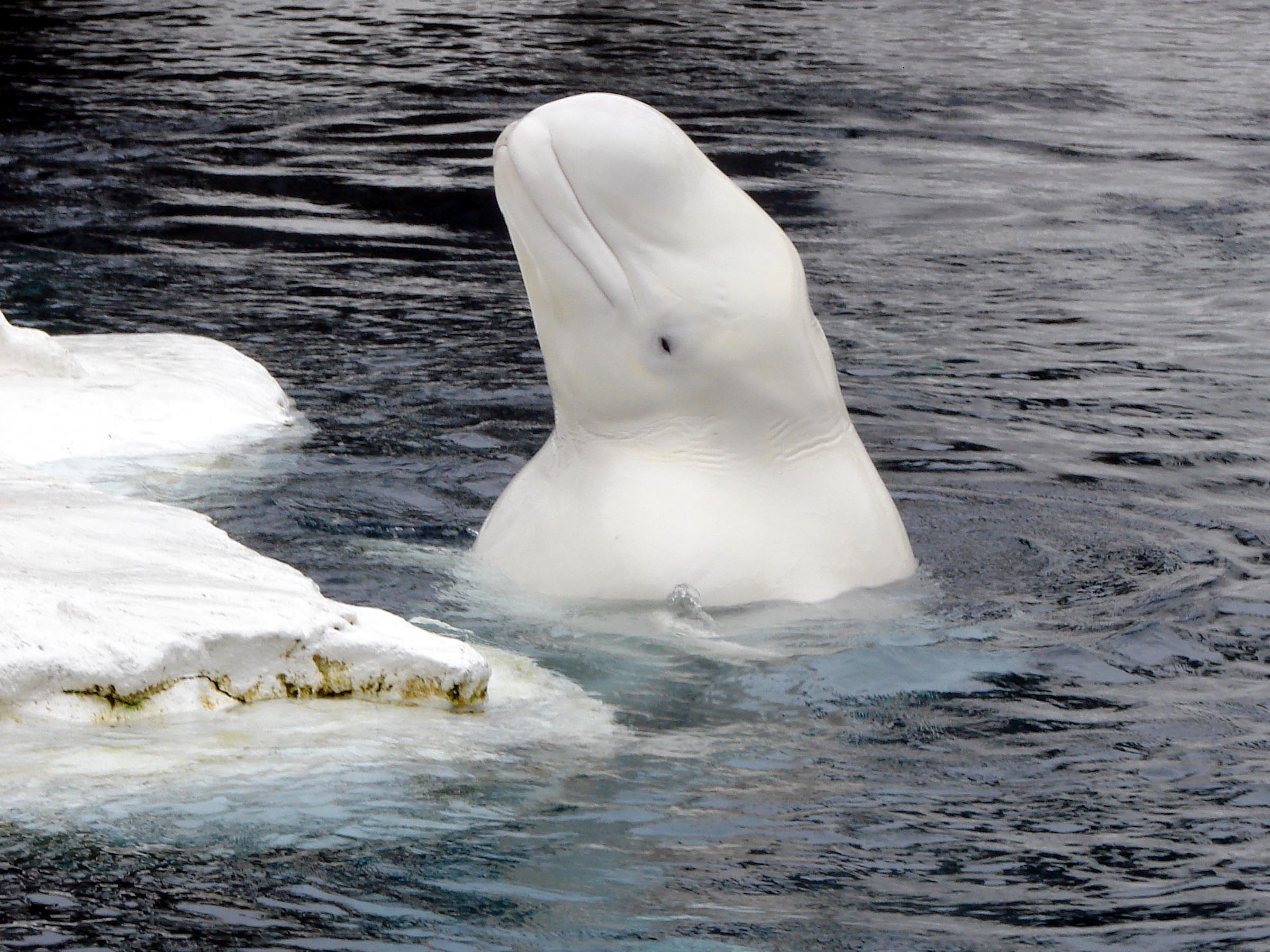
Photo Credit: flickr/Hafiz Issadeen. Image Description: A beluga whale alongside a piece of floating sea ice.
The decision to export these cetaceans to international aquariums is morally and legally fraught. Typically, aquarium captivity is not in a cetacean’s best interests—regardless of whether it is located in the US or Spain as opposed to being in China or Canada. Accreditation by the Association of Zoos and Aquariums (or AZA) is no guarantee of good animal welfare practices, though I suspect accreditation underlies the attraction of the reported choice of US aquariums. Accredited aquarium failures aside, the AZA has openly opposed government bans on the captive breeding of cetaceans despite the known welfare toll of that captivity on these animals. By relocating these animals outside of Canada and into jurisdictions lacking comparable law, these animals not only lack the protection of that law but, as legal property, can be bred as the receiving facilities see fit. It goes without saying that providing the means to perpetuate an industry is not an effective way to phase it out; it should also go without saying that inherently cruel captivity in one country is still inherently cruel captivity in another—if it could be otherwise, the cruelty would not be inherent. If, contra the assumption of Canadian law, aquarium captivity is not inherently cruel, it should be legally possible, and ethically preferable, to avoid the health risks of relocation by building the relevant facilities at home.
What is troubling about the Canadian government’s support to relocate the belugas to international aquariums is not exhausted by the questionable morality or legality of the decision. The decision to relocate the belugas puts in doubt any further attempts in Canada to see the captivity of other large mammals phased out. This is not a mere academic concern. There have already been failed attempts to pass bills through the Canadian Parliament that would phase out the captivity of great apes, elephants, and, recently, big cats among others. What is the point of any future pursuit of these goals if this merely means that these animals could be relocated from Canadian zoos to comparable international zoos? What could possibly reasonably qualify as a sufficient ethical motivation to phase out such captivity in only one country? If it is irredeemably wrong in one country, how could it be right in another? If it is not irredeemably wrong in every country, the problem does not lie in captivity per se but rather in the current conditions of that captivity. In such circumstances, we need better conditions of captivity not its elimination.
It is difficult to see how the Canadian government can extract itself from what appears, on the face of it, to be a cynical move to pass the buck. But efforts like the Whale Sanctuary Project in Nova Scotia remind us of other options.
__________________________________________
Andrew Fenton is a professor in the Department of Philosophy, and cross-listed in the Law, Justice and Society Program, at Dalhousie University.


