
Florence Ashley connects conservative attacks against gender-affirming care to wider fascist movements determined to eliminate marginalized groups
__________________________________________
No doubt we have learned different stories about the genesis of bioethics, stories that have shaped what we see as bioethics’ place in the world and our place within the profession. The story I was told began in Nazi-occupied Europe, where medicine and medical research were distorted by a fascist regime to serve an agenda of racial hygiene—a euphemism for the violent eradication of Jewish, Romani, disabled, queer, and trans people. Nazis understood their political ideology as little more than “applied biology.” Under Nazi rule, medicine’s ultimate purpose was not to heal or empower. Its purpose was to benefit the so-called Aryan race.
As the Nazi regime came crumbling down at the end of World War II, the Nuremberg Code was proffered in the hopes that its inhumanities could never arise again. To many bioethicists, the Code is akin to a constitution, “the most important document in the history of the ethics of medical research.” It later influenced the development of the Declaration of Helsinki and the Belmont Report.
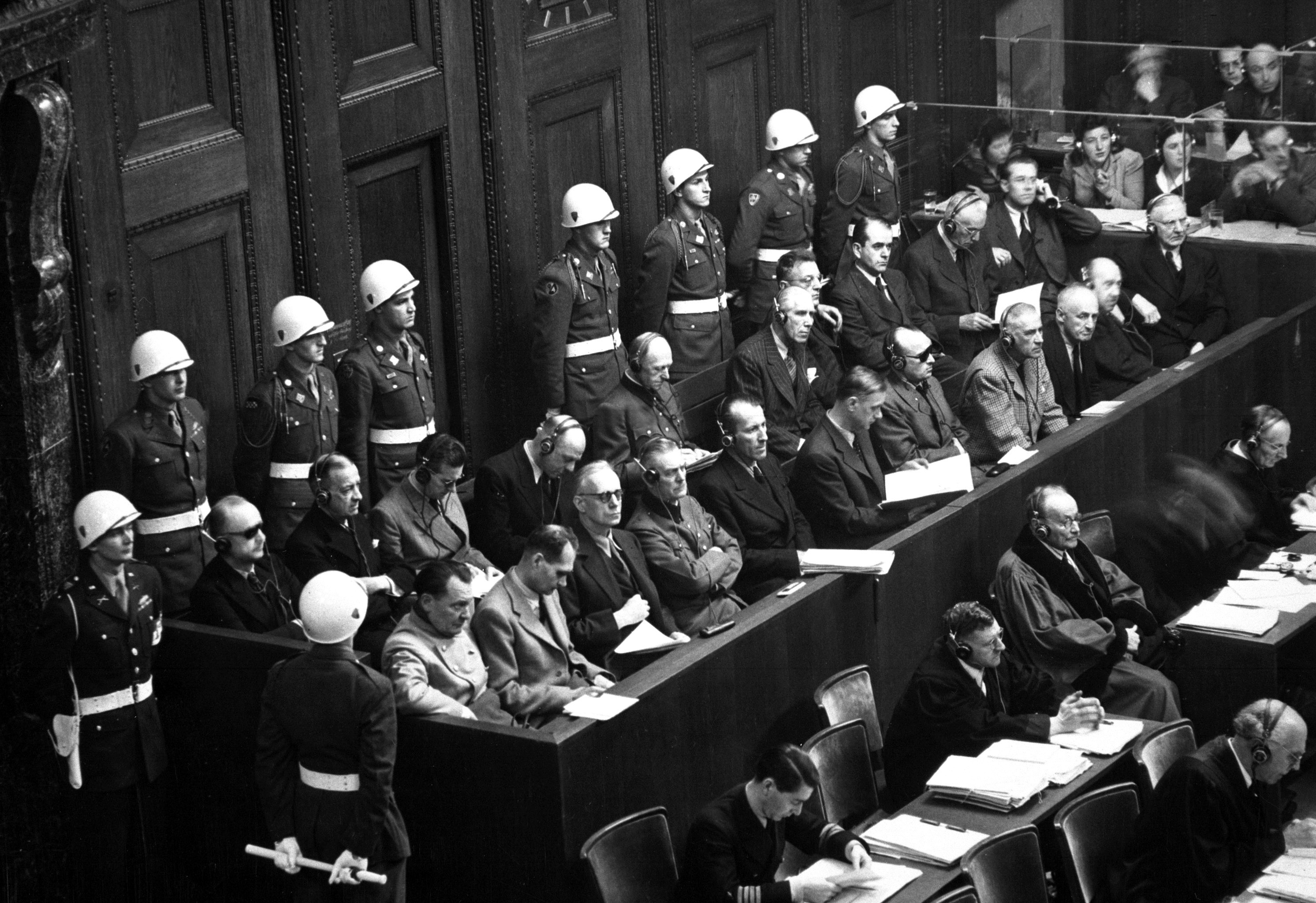
Photo Credit: flickr. Image Description: Nuremberg Trials.
Bioethics did not emerge so that we, privileged clinicians, researchers, and scholars, could take pleasure in pursuing some abstract moral truth. It emerged from a call for humanity and the end of prejudice. Bioethics, if it is to have any social value whatsoever, cannot forget its goal—human freedom and the pursuit of happiness for all. Will we serve fascism, will we fight it, or will we stand by as it wreaks havoc?
In the last few years, two dozen US states have adopted laws criminalizing gender-affirming care for minors and a well over a dozen more have proposed bills to that effect. After half a decade of proclaiming that they were only concerned with “saving the children,” as the familiar fascist slogan goes, a handful are now attempting to ban gender-affirming care at all ages.
I won’t bore you with arguments about how gender-affirming care is ethical, backed by scientific evidence, and widely supported by major professional associations. They are a distraction—legislative attacks on gender-affirming care aren’t about science, bioethics, or good medical practice. They’re about fascism. Medical fascism.
Fascism misuses medicine to mark certain people as undesirable. Bans on gender-affirming care are an attempt to marginalize trans communities and exclude them from the definition of a life worth living. That is why those who push for these bans, though they claim to follow science, simultaneously call for the “elimination of transgenderism.” And that is why these bans are assorted with laws mandating the removal of trans kids from their families, banning mentions of trans existence in schools, banning trans kids from participating in sports, and banning drag—often framed so broadly as to remove all trans people from public view. Attacks on gender-affirming care are medical fascism. Their end goal is that of the broader movement: the end of trans life in the public sphere.
Trans people may be few—and that’s enough for many to ignore what is happening—but fascism is rarely satisfied with attacking one group. In some of the most famous pictures of Nazi book burnings, if you look closely, you can see a bust of Magnus Hirschfeld. The books being burned were looted from his Institut für Sexualwissenschaft in 1933. To the Nazis, Hirschfeld’s work promoting acceptance of queer and trans people was a Jewish conspiracy to corrupt society. According to Nazi propaganda, Jewish scientists like Hirschfeldt used “the guise of scientific discussions … to direct mankind’s healthy urges down degenerate paths.” It would be easier to ignore this story as mere historical trivia were it not for the constant allegations that “transgenderism” is a Jewish conspiracy. Antisemitism, racism, homophobia, and transphobia are closely intertwined.
We can draw more connections, linking anti-trans legislation to anti-abortion and white supremacist movements. Fascists have a whole laundry list of people they consider undesirable and unworthy. As Umberto Eco once explained, fascism is predicated on a selective populism that enforces a narrow vision of the common will at the expense of marginalized groups, exploiting and exacerbating people’s fear of difference to delineate a range of “undesirables” who must be excluded or eliminated from society for the common good. Trans people are not the sole targets, though they are perhaps the easiest to pick on. After all, nobody seems to care enough to stand up to medical fascism for us. What have we, bioethicists, done? What have you done?
Bioethics was invented so that fascism, racism, and prejudice could no longer take hold of medicine. Too often, we have looked the other way when they did. Too few of us have done anything to fight the evisceration of abortion rights. Will bioethics be remembered for its inaction in the face of medical fascism and genocidal populism, or will it be remembered for honouring its roots and history by refusing to abandon marginalized people and fighting for their freedom to define who they are and pursue happiness on their own terms? If gender-affirming care falls, it is bioethics’ very soul that is in jeopardy. Because if bioethics cannot fight for what is right, what good is it for?
__________________________________________
Florence Ashley (they/them) is Assistant Professor at the University of Alberta Faculty of Law and John Dossetor Health Ethics Centre.
A version of this essay titled “Trans Bioethics in a Moral Panic” was presented as part of the DEI Webinar Series of the American Society for Bioethics and Humanities on May 18th, 2023.


 Impact Ethics